
RECONSTRUCTED SUITS


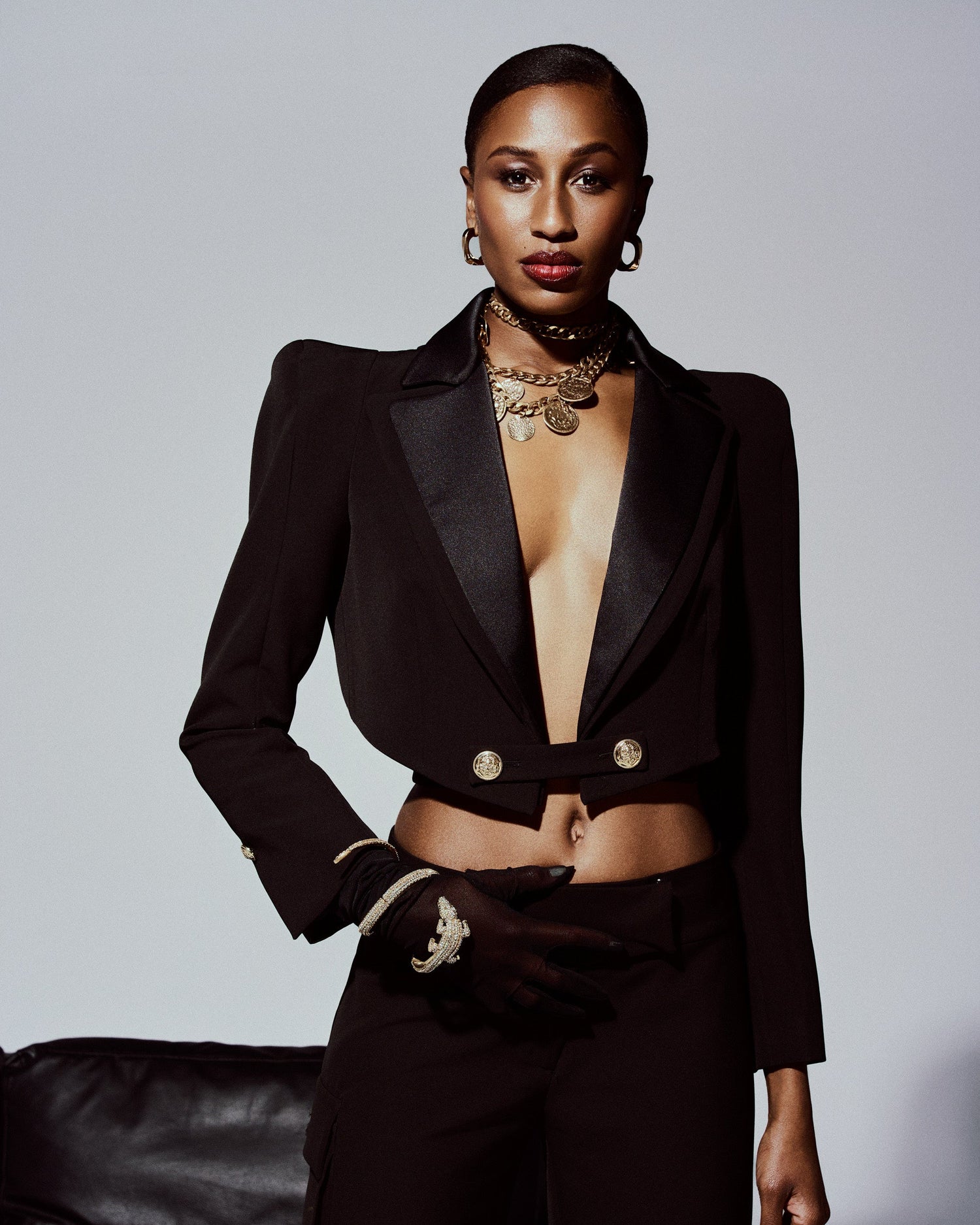
IBRAT Blazer
IBRAT comes from the Arabic word ʿibrah (عِبرة) and means lesson, learning, or warning left by an experience.
It has a profound nuance: it's not just "learning," but extracting meaning from what has been lived, almost like a teaching that marks and transforms.
The IBRAT Blazer in matte black with satin lapels, like a tuxedo, establishes itself as one of PASAIR's most daring proposals.

MAKTUB Trousers
MAKTUB (maktūb) comes from the Arabic مكتوب and literally means "it was written." It is a word linked to the idea of destiny, to that which had to happen.
But it does not have a passive tone; on the contrary, it usually conveys a mixture of acceptance, destiny, and a profound sense of the inevitable, as if everything had its place and its moment.
The MAKTUB pants in matte black reinterpret tailoring with a resounding precision.
Its low-rise waistband and classic closure emphasize the figure, and its elephant leg cut elongates the silhouette with fluidity.
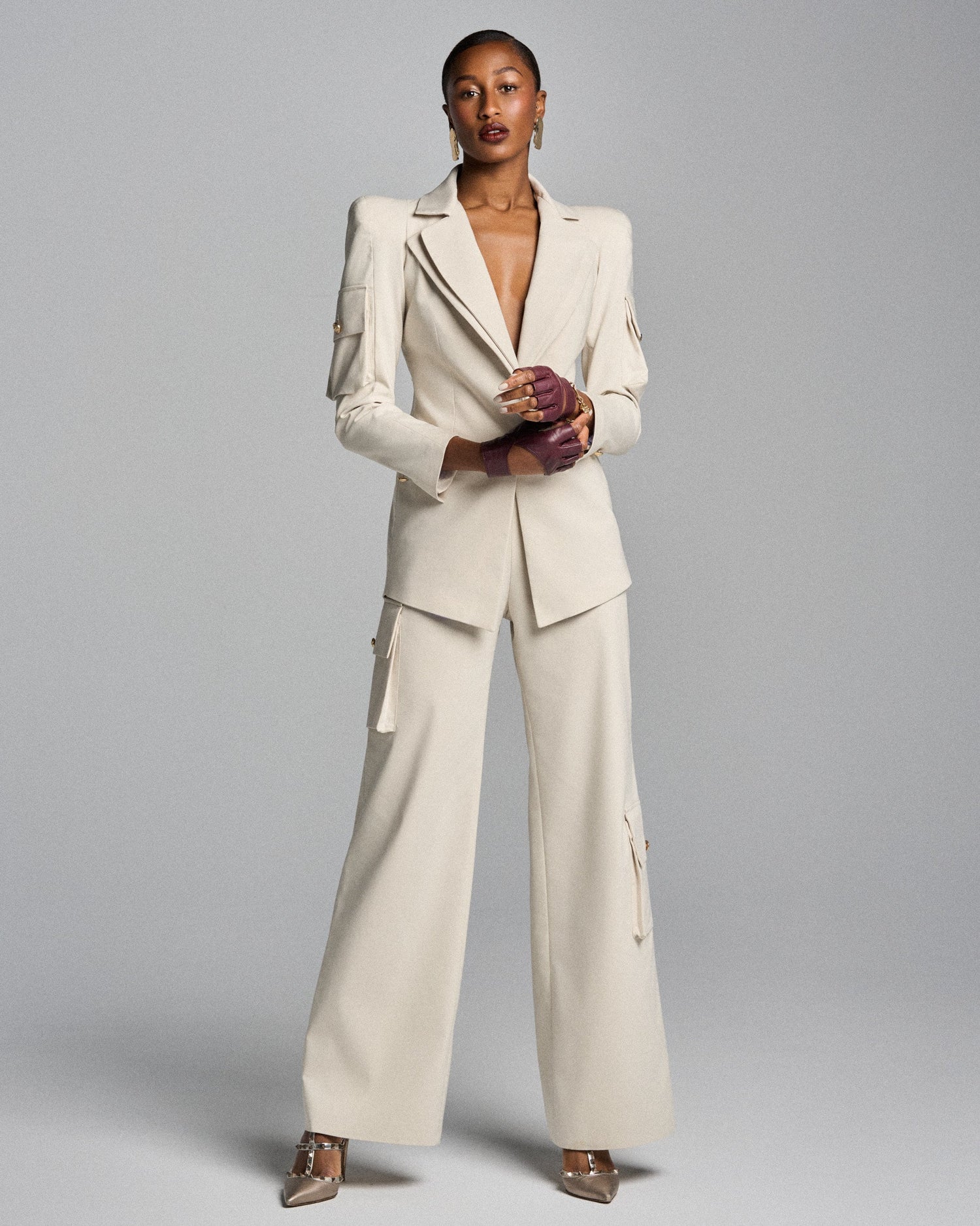
Blazer HENKO White
A Japanese term that refers to a transformative change where there is no possibility of returning to the initial state.
It represents great personal growth and proof that we are capable of believing in ourselves, precisely reflecting this act of bravery.
HENKO WHITE is a reinterpretation of the original olive green version, translated into a clean white that accentuates its essential and contemporary character, and a cotton fabric with a touch of elastane that provides comfort and lightness.
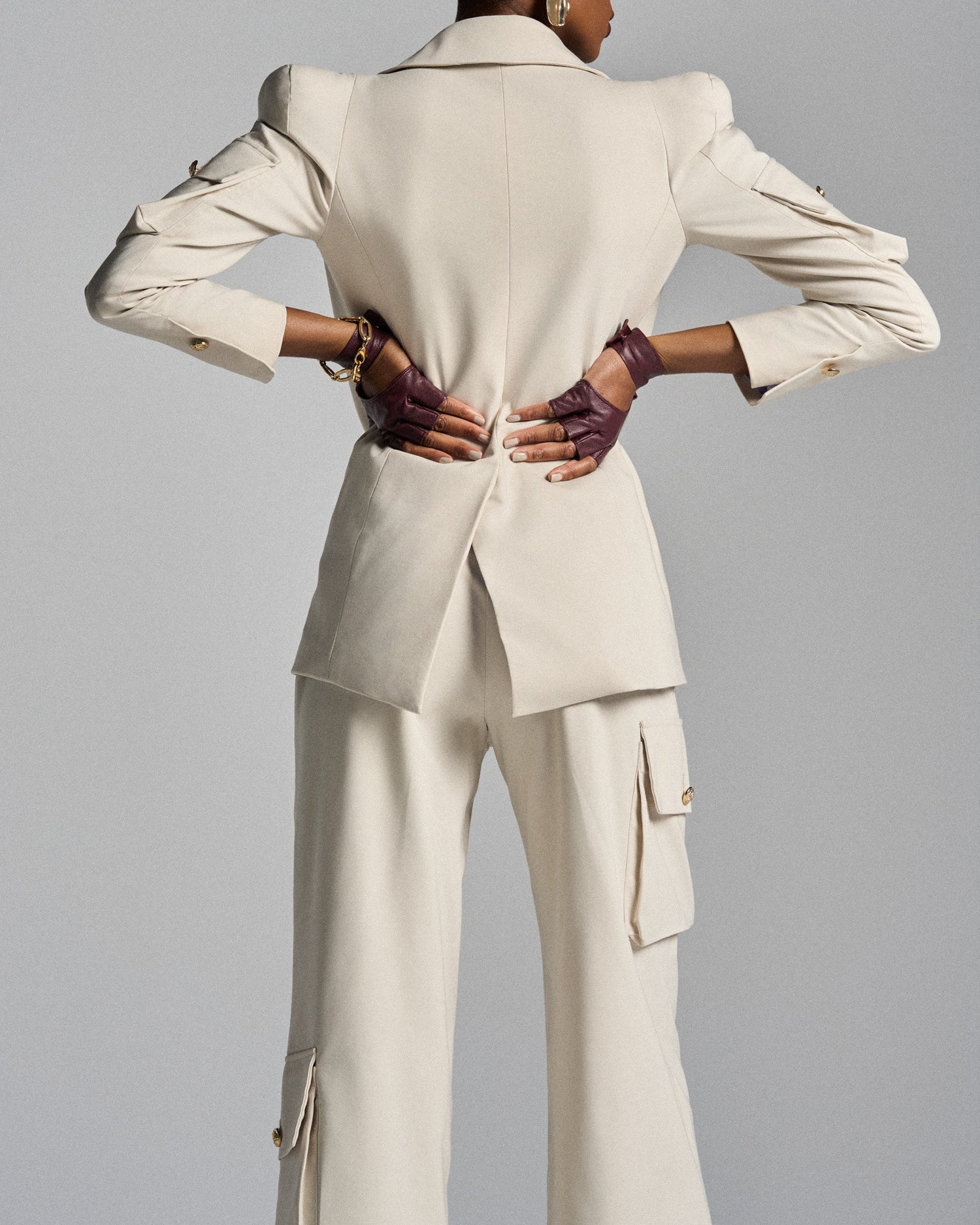
SHOGANAI White Pants
This Japanese word literally means "it cannot be helped."
It encourages acceptance and moving forward without regret.
SHOGANAI White is the white, reinterpreted pant version of its original olive green, with a cleaner and more contemporary aesthetic.
Made from cotton with elastane, it provides comfort and structure in balance.
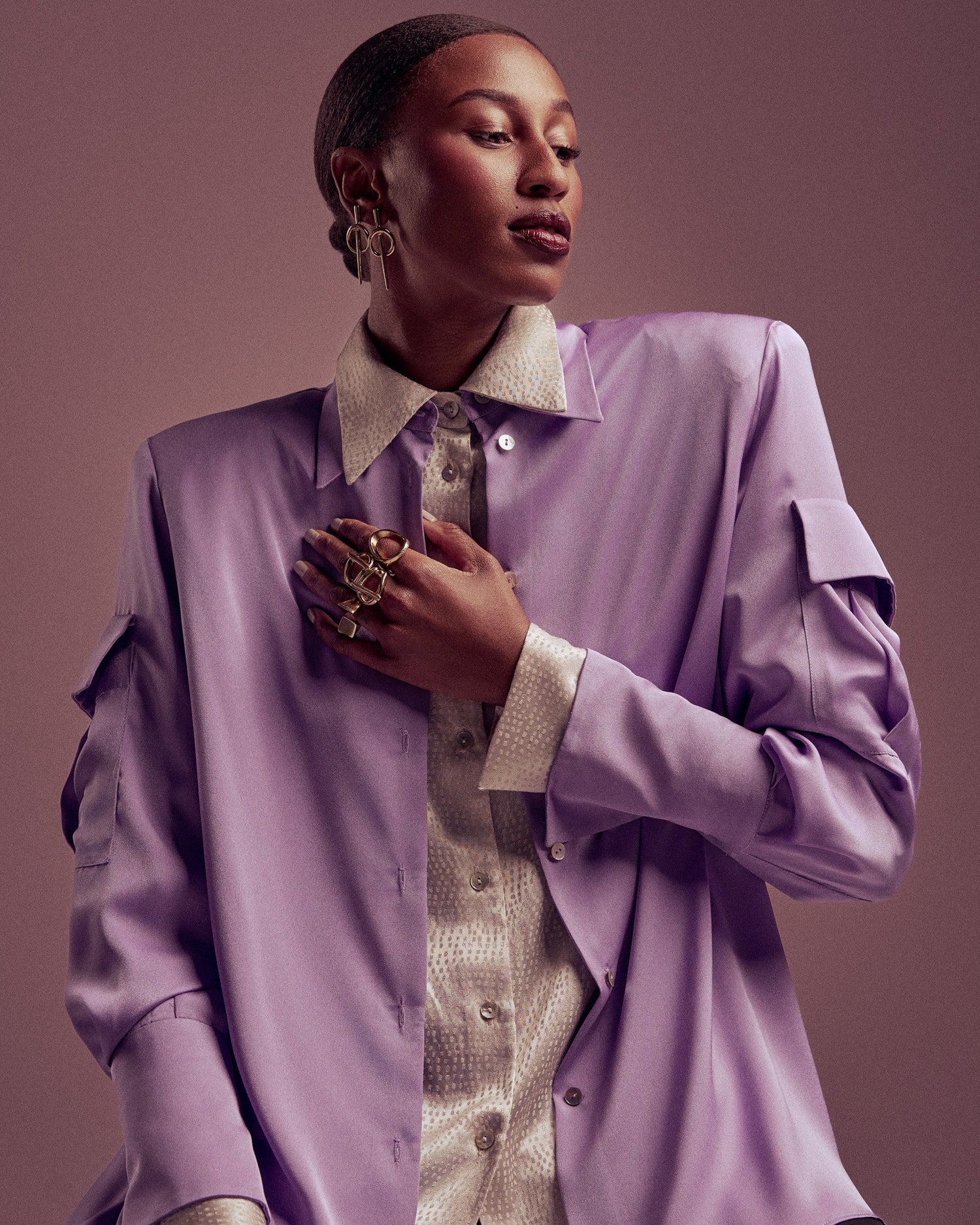
KAIMÓS Lilac Shirt
KAIMÓS: Greek word to express that feeling of sadness and longing.
KAIMÓS in lilac satin reinterprets the piece with fluidity, softening its character and providing a more delicate reading. A version that maintains the essence, but with a lighter and more ethereal gesture.

WABI Blazer
WABI-SABI: is a Japanese aesthetic concept that finds beauty in imperfection, simplicity, and the passage of time, valuing the incomplete, the irregular, and the ephemeral over the perfect and polished.
More than an aesthetic, it is a way of looking at the world where harmony arises from the natural and the essential, and beauty appears in a subtle, honest, and unadorned way.
The WABI blazer reinterprets this concept from a cropped silhouette that uses asymmetry in the lapels as its language. It intentionally breaks the classic tailoring balance and brings a more youthful energy due to its pink hue.
